
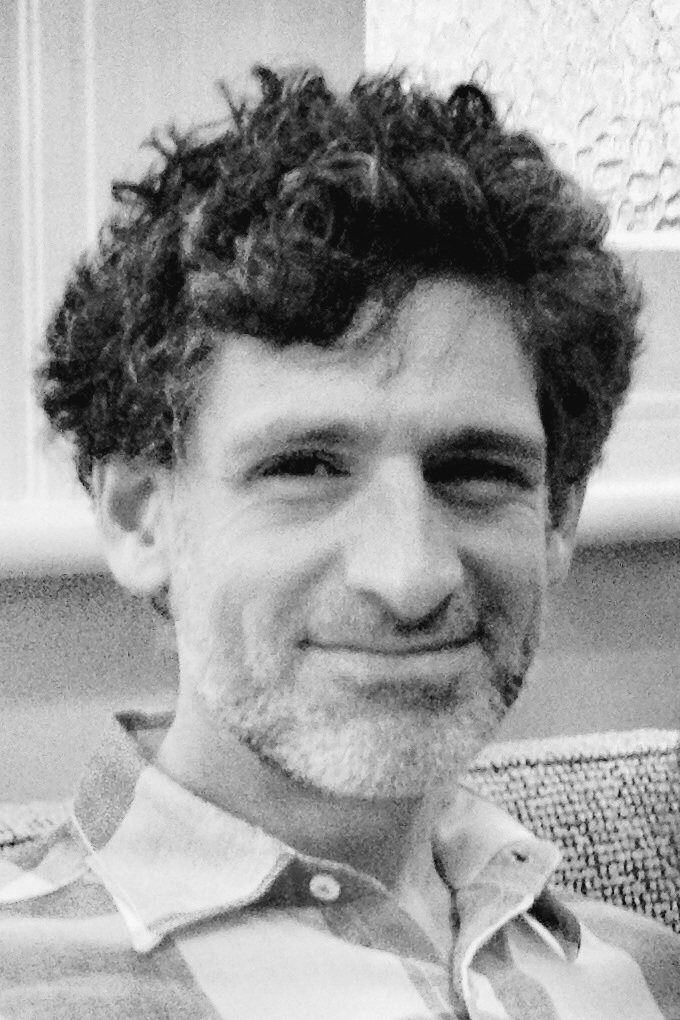
I am an Associate Professor in the Department of Biological Sciences at Macquarie University in Sydney, where I oversee the Ecological Register and Fossilworks.
My research focus for many years was diversity curves, speciation, and extinction, with most of my publications being about Cenozoic North American mammals or Phanerozoic marine invertebrates. But I have finally seen the light at the end of the Phanerozoic and turned my attention to quantifying diversity and extinction at this very moment.
My latest greatest inspirations are squares, the λ5 index, multiton subsampling, the double geometric distribution, the agnostic equation, the rescaled Forbes index, the creeping-shadow-of-a-doubt Bayesian extinction probability equation (say that a few times fast), and the gap filler turnover rate equations. But before that came shareholder quorum subsampling, which in its analytic form is known as "coverage-base rarefaction".
I also have current or recent projects concerning contemporary extinction rates, latitudinal species richness gradients, empirical abundance distributions, body mass estimation, Quaternary megafaunal extinctions, zoo finances, and, wow, at this point I'm starting to lose track of it all. Not to mention that oh so many years ago I worked way too hard on quantitative methods of time scale construction.
I am a graduate of Reed College and the Committee on Evolutionary Biology at the University of Chicago. Between 1994 and 1996 I was a post-doctoral fellow in the University of Arizona's Research Training Group in the Analysis of Biodiversification, which was affiliated with the Department of Ecology and Evolutionary Biology. Between 1996 and 1998 I had yet another post-doc with the Smithsonian Institution's Department of Paleobiology and Evolution of Terrestrial Ecosystems program. And between 1998 and 2010 I was a resident phantom at the National Center for Ecological Analysis and Synthesis in Santa Barbara.
If that's not enough, my CV gives all the gory details. And if you simply must know right now you can cast an e-mail into the ether using this very special address: <john dot alroy at mq dot edu dot au>.
And yes, I think that someday the Mets will win the World Series. Can't vouch for the Knicks, though.
Recent sole-authored papers
Greatest hits
Old favourites
Alroy's Abbreviated Ten Statistical Commandments
Overarching themes
• Log thy data
• All is a gradient
• See the nonparametric light
• Disdain p-values
• Maximize a posteriori
Diversity curve variations
• Abhor tiny time series
• Detrend thy time series
• Sample fairly, not uniformly
• Count only thy sampled taxa
• The secret of life is... gap fillers
Methods
• Squares richness estimator (Ecology Letters, 2018)
• λ5 richness estimator (PNAS, 2017)
• Multiton subsampling (PNAS, 2017)
• Agnostic equation (PNAS, 2015)
• Corrected Forbes index (Ecology, 2015)
• Creeping-shadow-of-a-doubt probabilities (Paleobiology, 2014)
• Gap filler turnover rates (Paleobiology, 2014)
• Shareholder quorum subsampling (Science, 2010)
• Three timer turnover rates (PNAS, 2008)
• Flux ratio (PNAS, 2002)
• Proportional volatility G statistic (Paleobiology, 2000)
• Cohort-based turnover proportions (Palaeo3, 1996)
• Occurrences-weighted subsampling (Palaeo3, 1996)
• Continuous track analysis (Systematic Biology, 1995)
• Appearance event ordination (Paleobiology, 1994, 2000)
• Compatibility permutation tests (Systematic Biology, 1994)
• Disjunct distribution ordination (Paleobiology, 1992)
Plus some really bad ones not worth mentioning. Plus a database that sucked up way too much time, as you can tell...